

Self-awareness in leadership has emerged as one of the most valued qualities in leadership today. In a recent LinkedIn poll we ran, asking “What are the key qualities a leader should possess?”, the top response was clear: self-awareness, closely followed by good communication.
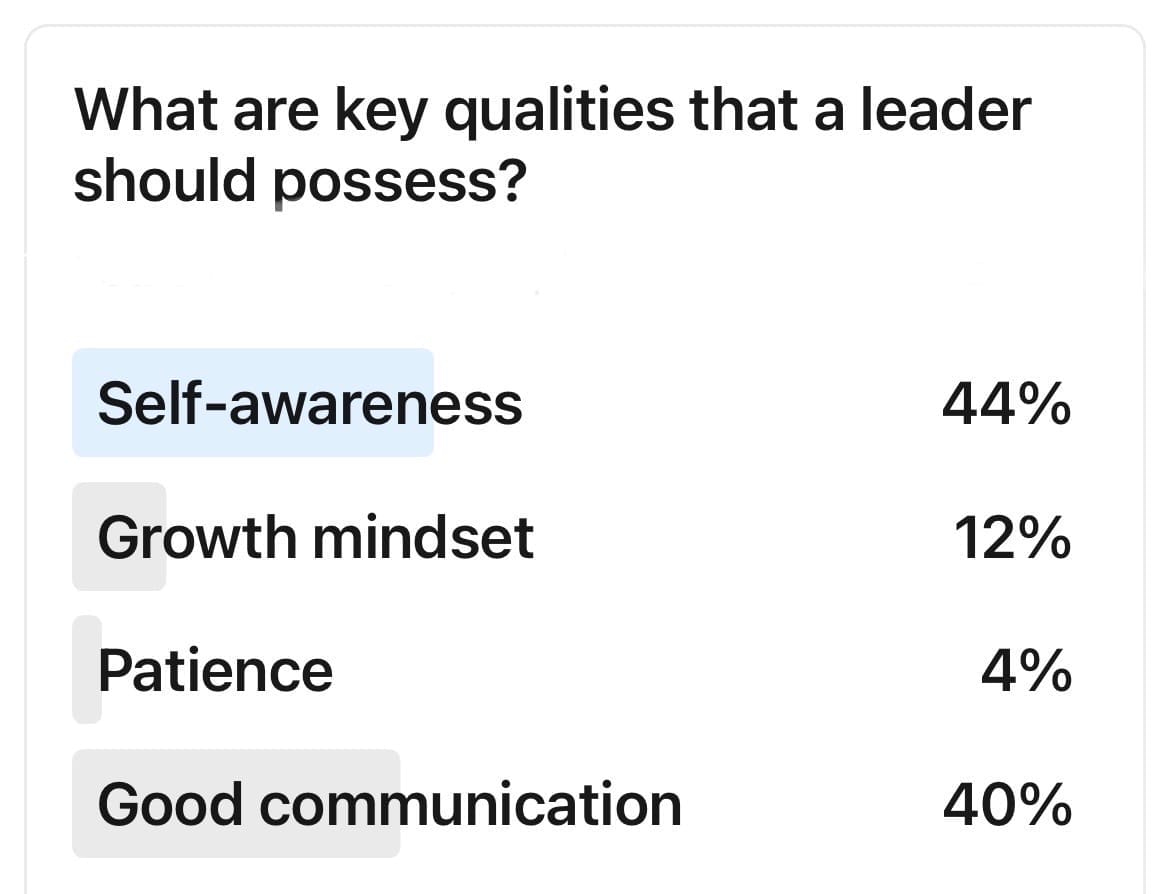
This finding reflects a broader truth: leaders who understand their strengths, limitations, and the impact they have on others are not only more authentic, but also more trusted and effective. And while self-awareness may feel intangible, it’s a skill that can be developed. Below, we explore four key dimensions that every leader can strengthen to increase their authenticity, credibility, and influence.
1. Know Your Strengths and Gaps
Being a manager or leader doesn’t mean being the expert in everything. In fact, people value a leader who can admit, “That is not my area, let’s draw on the expertise in our team,” far more than someone who pretends to have all the answers.
Understanding what you do well and where you have room to grow allows you to identify learning goals, and also to elevate others with complementary strengths. For example, saying “I don’t know the background to this process, but Jay is our team expert” not only strengths your credibility but also builds confidence and visibility for your team members.
Leadership takeaway: Leaders who are honest about their strengths and limitations build psychological safety, which research shows is the number one predictor of high-performing teams.

2. Understand Your Interaction Style
Completing a personality inventory or questionnaire can provide valuable insight into how you prefer to interact with others. When you whole team does the same, it can lead to a deeper understanding of how different people prefer to communicate and collaborate.
The purpose of these tools isn’t to pigeon-hole people or to claim that one ‘type’ is better than another – it’s to shed some light on people’s behaviour and preferences. . For instance, if your team is mostly outgoing and outspoken but one team member who is a more reflective, adjusting your approach in meetings can ensure everyone feels comfortable contributing.
At WLA, we use the People Styles model which identifies four main styles – amiable, driving, expressive or analytical. But there are many other frequently used options, including DiSC. Whichever tool you use, using it as a team activity can spark valuable conversations about how to work together more effectively.
Leadership takeaway: Leaders who understand their own style and the preferences of others are far better at creating inclusive, collaborative environments.

3. Recognise Your Conflict Management Preferences
We all bring our history and personality to conflict. The Thomas-Kilmann Conflict Model describes five ways of responding to conflict: avoiding, accommodating, competing, collaborating and compromising. While the ideal is to adapt your approach based on the situations, most of us default to one or two styles under pressure.
Being aware of your natural tendency, and knowing its advantages and disadvantages, can help you to become more flexible in your approaches to conflict. For instance, if your preference is to be accommodating, that might serve you well in maintaining harmony, but in some situations where critical issues are at stake, a more assertive approach may be needed.
Leadership takeaway: Leaders who can adapt their conflict style build stronger trust and credibility, showing they can balance empathy with decisiveness.

4. Live Your Values and Personal Brand
Authenticity in leadership comes from alignment between what you say and what you do. That alignment starts with clarity on your values. What drives your decisions and your behaviour? How do your values align with the values of your team or your organisation?
Taking time to reflect on these questions not only helps you lead more authentically but also strengthens your personal brand. A personal brand clearly communicates your purpose, values, priorities, strengths, and style to create a distinct identity. which is the way others perceive your purpose, values, priorities, and style. A strong personal brand enhances your visibility, establishes credibility, and fosters trust, leading to greater opportunities and career growth. Ask yourself, if your team were asked to describe what matters most to you, , would their description match what your own view?
Leadership takeaway: Leaders who live their values foster trust and integrity, inspiring greater commitment and motivation in their teams.

Building self-awareness is not just about personal growth — it’s about shaping the kind of leader others want to follow. Leaders who understand themselves create teams that feel valued, trusted, and motivated. They model authenticity, embrace difference, and handle conflict with courage and clarity.
Developing self-awareness is a lifelong journey, but it’s one of the most powerful investments you can make in your leadership. Leaders who understand themselves deeply don’t just improve their own performance; they create cultures of trust, resilience, and growth.
Build on your self-awareness with the right leadership program. Start with our short quiz to discover your next step
